Dead, dying and cracked trees
Dead & Hazard Tree Removal in Rock Hill, SC
Brittle and rotten trees taken down carefully, because dead wood doesn't behave like live wood.
- On-site quotes at no charge in Rock Hill and York County
- Prices put in writing before the crew arrives
- Cleanup terms written into the estimate
Why Dead Trees Need a Different Approach
Dead and hazard tree removal is different from removing a healthy tree. Dead wood dries, cracks and loses strength, so limbs can snap when a climber puts weight on them, and a trunk with decay at the base may not hinge the way a sound one does when it is felled. In Rock Hill the trees that end up in this category are mostly pines killed by beetles or drought, water oaks that have rotted from the inside, ash trees in decline, and trees that cracked or lost roots in a storm or a construction project.
Pines killed by beetles
Pine bark beetles, including southern pine beetle and Ips engraver beetles, attack pines that are already stressed by drought, lightning, storm damage or root injury from construction. Signs include small popcorn-like blobs of resin on the bark, fine reddish boring dust in the bark crevices and at the base, and needles fading from green to yellow to red. By the time the crown is brown, the beetles have usually left, but the tree is dead and will become brittle quickly. A dead pine near a house should come down while the wood can still be climbed or rigged.
Water oaks and hidden rot
Clemson Extension notes that water oak does not resist decay well and that trunks often begin to rot by about 50 years of age. Plenty of water oaks in Rock Hill's older neighborhoods are at or past that age. Warning signs include mushrooms or shelf-like conks on the trunk or roots, cavities, dead limbs high in the crown, and bark falling off in patches. A hollow trunk can stand for years and then fail in an ordinary thunderstorm.
Ash and emerald ash borer
Emerald ash borer has been found in York County, according to Clemson's Home and Garden Information Center. Green and white ash are the common species here. Look for D-shaped exit holes in the bark, lighter patches where woodpeckers have flaked off the outer bark, thinning from the top down and sprouts along the lower trunk. Clemson notes that heavily infested trees likely can't be saved. Dead ash becomes brittle quickly, which makes it more dangerous to take down later.
Other warning signs
- A new or worsening lean, especially with soil heaved or cracked on one side
- A deep crack or split running through a fork
- Roots cut within a few feet of the trunk for a driveway, foundation or utility line
- Large dead limbs over the roof, driveway or play area
- Half the crown leafing out late or not at all
Typical Jobs
Hazard work covers the assessment, the removal and the cleanup of trees that can't be trusted.
Dead pine removal
Beetle-killed or drought-killed pines taken down before they become too brittle to climb.
Hollow and rotting hardwoods
Water oaks and other hardwoods with decay, taken down with rigging set to account for weak wood.
Declining ash
Ash trees thinning from emerald ash borer, removed while still safe to work on.
Cracked and split trees
Trees with split forks or storm cracks taken down before the next wind finishes the job.
Lift or crane access
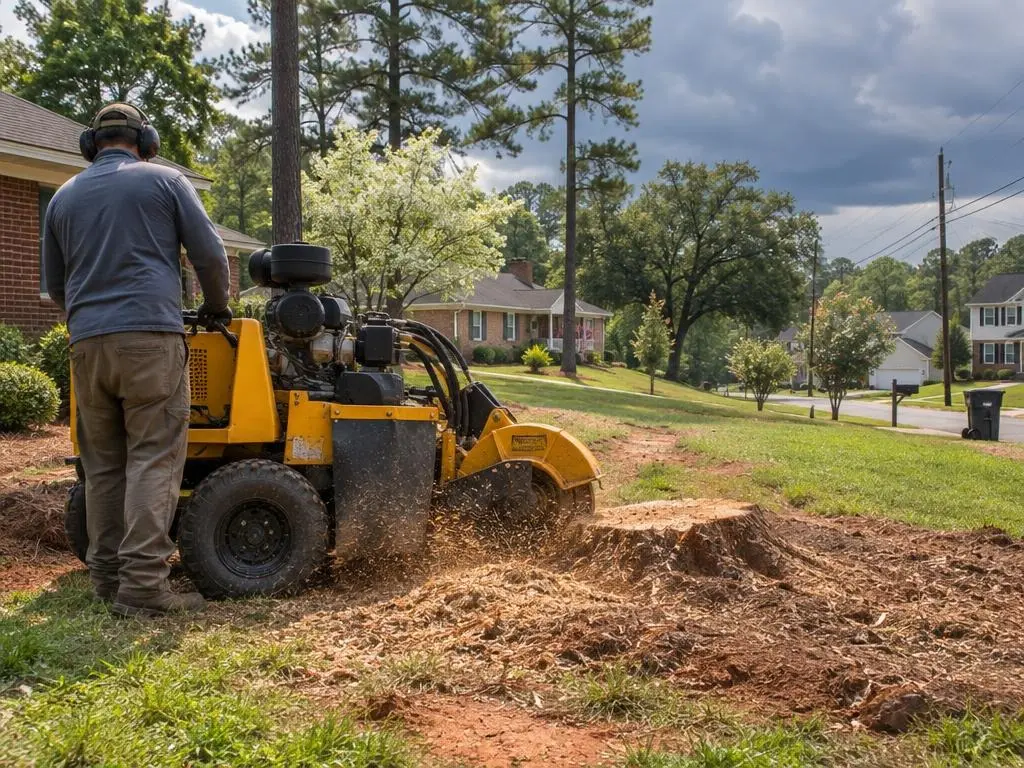
When a tree is too weak to climb, the crew works from a lift or uses a crane.
What Dead and Hazard Tree Usually Costs
| Job | Published range |
|---|---|
| Diseased tree with soft wood (Angi, national) | $400 to $900 |
| Typical removal, Rock Hill (This Old House) | $247 to $1,086 |
| Pine tree (HomeGuide, national) | $250 to $1,600 |
| Tree 60 to 80 ft (Angi, national) | $800 to $1,500 |
| Poor health or structural issues (Angi) | up to 15% more |
Ranges from Angi (2026), HomeGuide (2026) and This Old House's Rock Hill guide (2024). Dead trees often take longer because climbers can't rely on the wood. Your written estimate is the price.
From Quote to Cleanup
1. Assess the tree
We check the trunk, root flare, crown and what sits under the tree to decide if and how it can be climbed.
2. Written estimate
The quote names the method, whether a lift or crane is needed, and the cleanup.
3. Remove it
Dead tops and limbs come off first, then the trunk, rigged for weak wood.
4. Clean up
Wood and brush hauled or left as agreed; stumps ground if included.
Why Choose Us for Dead & Hazard Tree Removal
An honest read on the tree
If a tree only needs dead limbs removed, we say so rather than quoting the whole tree.
Method matched to the wood
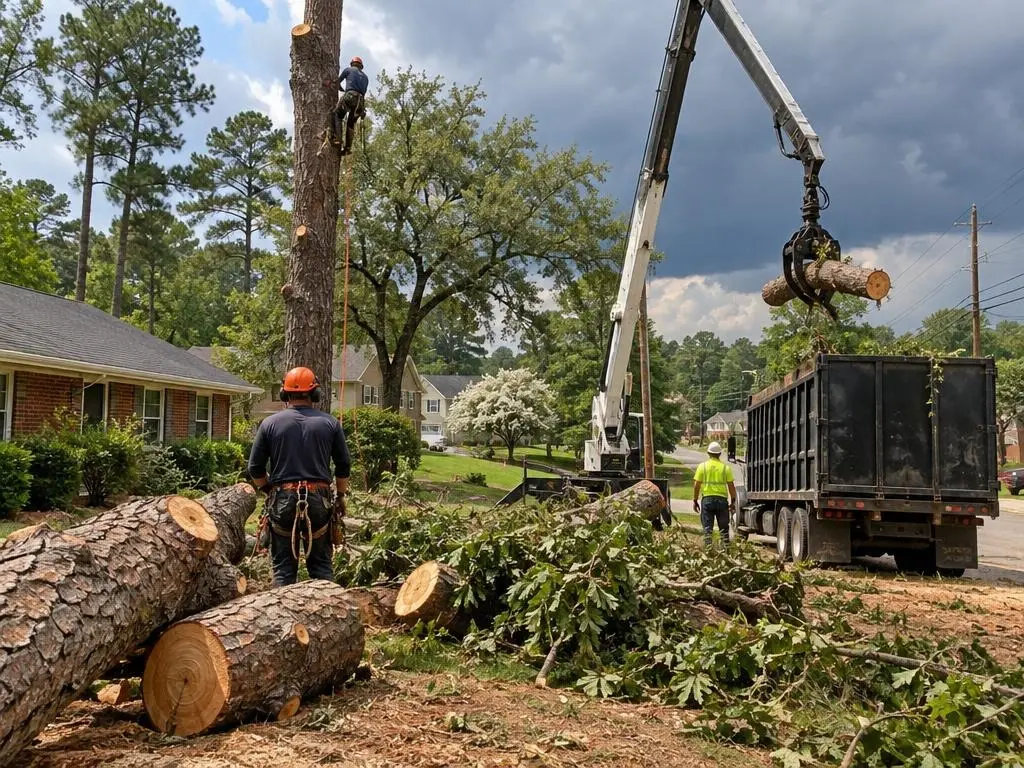
Brittle trees get lifts, cranes or extra rigging rather than a climber on dead limbs.
Dead & Hazard Tree Removal Questions
How can I tell if a tree is dead or just dormant?
In winter, scratch a small spot of bark on a twig with your thumbnail. Green underneath means it is alive; brown and dry means that part is dead. For pines, brown needles in summer are a clear sign of trouble. If you are unsure, we can look at it during an estimate.
Can a dead pine be saved?
No. Once a pine's crown has turned red or brown from beetles or drought, the tree is dead. What matters is taking it down before it gets brittle, and checking nearby pines for signs of attack.
Is a tree with a hollow trunk dangerous?
It depends on how much sound wood is left around the hollow and what the tree could hit. A small cavity in a big trunk may not be a problem; a thin shell holding up a heavy crown over a house is. We look at the size of the cavity, the lean and the target.
Should I treat my ash tree instead of removing it?
Clemson Extension says insecticide treatment can protect valuable ash trees, ideally before they are infested, and that it is repeated every year or two for the life of the tree. Treatment should be applied by a licensed pesticide applicator. Trees that are already heavily infested usually need to come down.
Dead & Hazard Tree Removal Service Areas
- Tree Removal in Rock Hill, SC
- Tree Removal in Fort Mill, SC
- Tree Removal in Tega Cay, SC
- Tree Removal in Lake Wylie, SC
- Tree Removal in India Hook, SC
- Tree Removal in Newport, SC
- Tree Removal in Lesslie, SC
- Tree Removal in Catawba, SC
- Tree Removal in York, SC
- Tree Removal in Clover, SC
- Tree Removal in Indian Land, SC
- Tree Removal in Van Wyck, SC
- Tree Removal in Lancaster, SC
- Tree Removal in Chester, SC
- Tree Removal in Charlotte, NC
- Tree Removal in Ballantyne, NC
- Tree Removal in Pineville, NC
- Tree Removal in Matthews, NC
- Tree Removal in Weddington, NC
- Tree Removal in Marvin, NC
- Tree Removal in Waxhaw, NC
- Tree Removal in Belmont, NC
- Tree Removal in Gastonia, NC
Get a Dead & Hazard Tree Removal Estimate
Free estimates for dead and hazard trees in Rock Hill.